
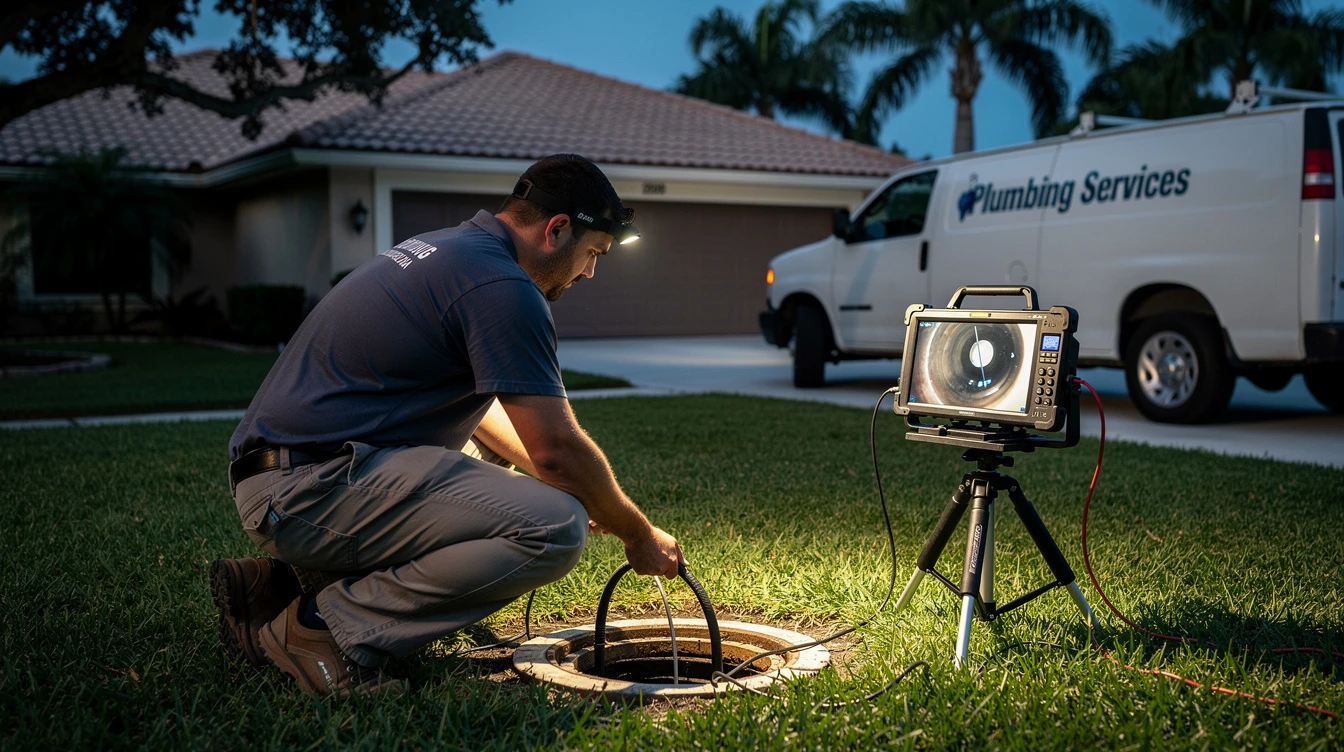
Track The LeakBefore It Costs You The Kitchen
A rising water bill or a mystery damp spot rarely explains itself, and by the time drywall bubbles or a floor starts to cup, the damage is already spreading. Our techs runacoustic listening gear, tracer-gas testing, and infrared imaging to isolate the exact break point across Weston, Deerfield Beach, and the surrounding tri-county area.
Six clues that a pipe is leaking out of sight
Nothing about your routine changed but the meter reading climbed sharply. A concealed pipe leaking around the clock will do exactly that, and the utility company won't be the one who tells you why.
Cupped wood planks, a laminate seam that lifted overnight, or tile that suddenly feels warm underfoot all point the same direction: moisture is working its way up from a pipe below.
Stand still in a quiet room with every fixture closed. If you can still hear a whisper of running water, a pressurized line is escaping somewhere close by, and our acoustic sensors are built to isolate that exact tone.
Florida humidity turns any hidden moisture into a mold problem fast. If a closet, hallway, or baseboard has started smelling earthy for no obvious reason, there's a good chance water has been sitting behind that wall for a while.
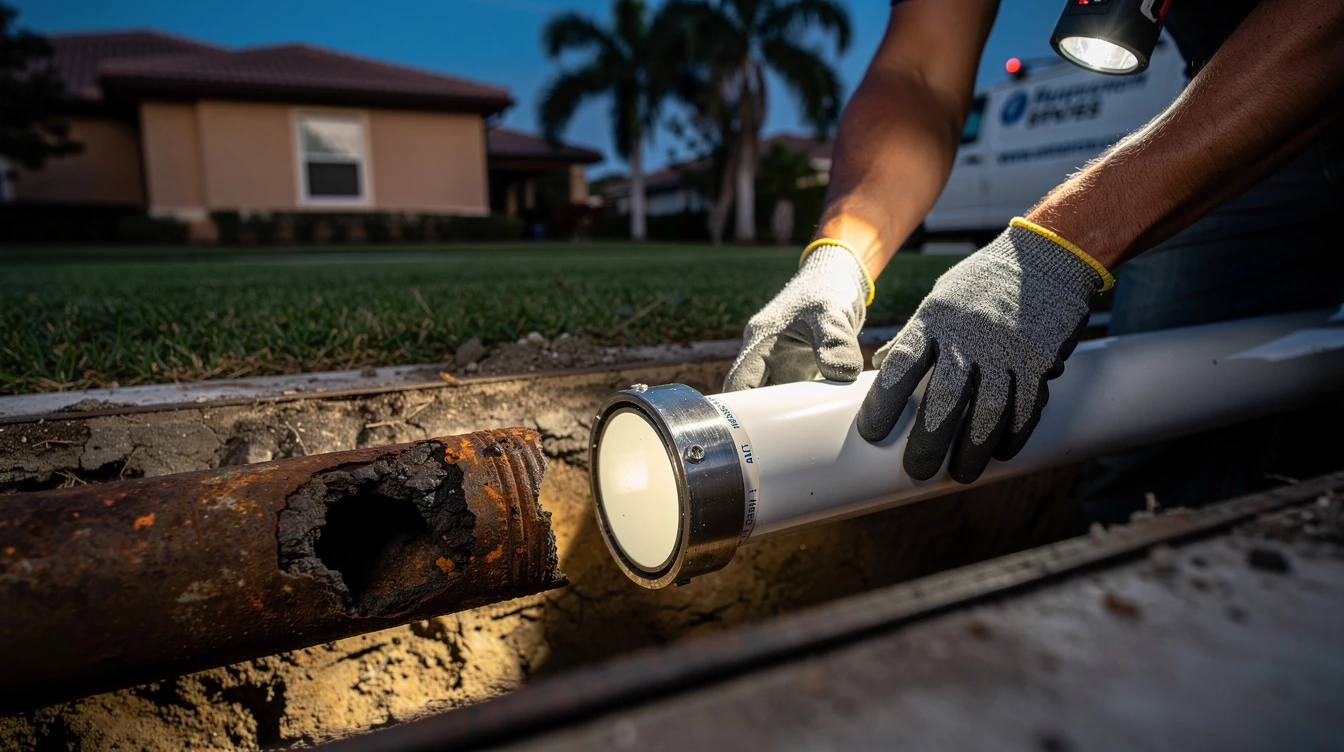
Aging copper and galvanized supply lines corrode and pinhole over time. As water bleeds out through that tiny opening, the fixtures downstream feel it first through dropping pressure.
You already tested it yourself: everything off, and that little indicator still spinning. That's about as clear a signal as you'll get before calling someone to actually find the source.
Do this quick check before you call
You can confirm a suspected leak yourself in under twenty minutes. Shut off every faucet, appliance, sprinkler timer, and ice maker, and make sure no toilet flapper is running. Locate your water meter, usually near the curb or property line, and write down the exact digits along with the position of the small leak-indicator dial. Leave everything untouched for 20 to 30 minutes, then check the meter again. Any movement in that window means water is leaving your system somewhere. To narrow it further, close the main shutoff valve at the house and watch the meter one more time: if it stops moving, the leak sits inside the home; if it keeps ticking, the problem is between the meter and your house. Share those results with us and we'll skip straight to pinpointing.
Six steps from suspicion to certainty
We isolate your supply lines and run a static pressure test to confirm a true plumbing leak versus an irrigation or pool-fill issue. Separating hot from cold at this stage tells us right away which side of the system to chase.
Amplified ground microphones let us hear water moving under concrete, tile, and soil that would otherwise stay silent. We walk a methodical pattern across the suspected area, noting where the signal reads loudest.
On tougher jobs we push a nitrogen-hydrogen tracer gas through the line and follow it with a sensitive sniffer to map the pipe route. That gives us a second, independent confirmation before we mark anything.
A thermal camera picks up the temperature shift a leak leaves behind, a warm streak from a hot-water line under tile or a cooler moisture pattern soaking through drywall. It's often the step that turns a suspicion into a marked spot.
Once two or more methods agree on a spot, we mark it and photograph the readings that led us there. This is also where we write up findings for anyone who needs to file an insurance claim.
We lay out the realistic paths forward: a targeted spot repair, rerouting the line to avoid re-opening a slab, or a broader repipe if age is catching up with the whole system. You decide before a single cut is made.
Why one detection visit costs more than another
Every property hides its plumbing a little differently. Here's what actually moves the price of a visit, explained plainly so there's no surprise before we start.
- Depth of the pipeA line running through drywall reads fast; one buried under a slab and finished flooring needs more equipment time to isolate.
- Square footage to coverA single-story spread with long pipe runs simply takes longer to grid than a condo with a compact footprint.
- Surface materialsNatural stone and thick poured slabs dampen acoustic signals more than standard tile, which means added cross-checking.
- Age of the plumbingOlder copper systems tend to develop more than one pinhole, and each one has to be tracked down on its own.
- Report requirementsA full write-up with photos and thermal readings for an insurance claim takes longer than a quick verbal answer.
- Getting to the suspect areaCabinets, built-in furniture, and tight crawlspace clearances can all add time before testing even begins.
Serving Broward, Palm Beach, and Miami-Dade
Broward County
- Deerfield Beach
- Pompano Beach
- Fort Lauderdale
- Plantation
- Davie
- Pembroke Pines
Miami-Dade County
- Miami
- Aventura
- Miramar
- Hollywood
Palm Beach County
- Boca Raton
- Delray Beach
- Boynton Beach
- Lake Worth
Real leaks, real spots, no exploratory demo
"Our water bill was almost triple what it should've been and I braced myself for a torn-up living room. They walked the floor with a microphone, marked one small spot near the hallway, and that was it. No wall demolition at all."
There was a musty smell in the guest bedroom that wouldn't go away no matter how much I cleaned. Turned out to be a pinhole leak behind the closet wall, found with a thermal camera. The report they gave me made the insurance side almost easy.
"Another company told me they'd need to open three separate walls just to guess. This crew tested the pressure, listened, cross-checked with gas, and had it marked in about forty minutes. Fair price and no surprises after."
"A warm strip on my kitchen tile turned out to be the hot-water line under the slab. They found it fast, showed me the imaging, and gave me a couple of repair options before touching anything. Genuinely straightforward experience."
Leak Detection, Answered
Can a leak really be found under a concrete slab without digging?
In most cases, yes. Slab-on-grade construction is common across South Florida, which means water lines often run directly through the concrete foundation. Our acoustic equipment picks up the sound signature of pressurized water escaping beneath that slab, and we back it up with tracer gas or thermal imaging to narrow the spot further. Once two methods agree, we mark the location precisely so any repair opening stays as small as we can make it.
Will you have to cut into my walls or floors just to locate it?
Not for the detection phase. Acoustic listening, tracer gas, and thermal scanning all work through tile, drywall, and concrete without any cutting. The only opening we make is a small, targeted access point once we know exactly where the repair needs to happen. That's a very different experience than the old guess-and-cut approach some homeowners have dealt with before.
How precise is the location you give me?
For a standard pressurized supply leak, we typically narrow it down to a few inches of certainty. Accuracy goes up whenever we can cross-confirm with more than one method: an acoustic peak matched by a thermal reading leaves very little room for doubt. Deep slabs, dense stone flooring, or multiple leaks at once make the job more involved, which is why we grid systematically rather than take a single reading and stop. If a reading ever comes back unclear, we tell you directly instead of cutting on a guess.
Can I use your findings for a homeowner's insurance claim?
Yes, we build a written report documenting where the leak is located, what likely caused it, and the readings and images that support that conclusion. Adjusters generally want to see clear evidence of a sudden or hidden failure before approving damage repairs, and having documentation ready before you file tends to speed things along considerably. Tell us up front that a claim is involved and we'll structure the report accordingly.
What determines how much a detection visit will cost me?
Pricing depends on how deep the leak sits, the size of the home, the flooring we're reading through, and whether there's likely more than one leak to isolate. A single accessible line under a sink is a quick visit; a suspected slab leak under natural stone in a large home takes considerably more time and equipment. If a full insurance-grade report is needed on top of that, we factor in the documentation work too. We'll walk through all of it and confirm a number with you before anything begins.
Request A Detection Visit
Get an exact answer, not a guess
A leak left untraced only gets more expensive the longer it runs, and South Florida humidity turns hidden moisture into mold fast. Let Weston Emergency Plumbing SFL pinpoint the source non-invasively and hand you a documented answer you can act on.