
"I expected them to tell me the whole yard needed to be torn up. Instead they ran the camera, showed me the one bad joint by the cleanout, and fixed just that section. Saved me thousands and my landscaping stayed intact."

Sewer LineRepair
Backups, gurgling drains, and a soggy patch of yard usually trace back to one buried section of pipe. We drop a camera down the line first so you know exactly what's wrong, roots, a cracked joint, a low spot holding water, before anyone picks up a shovel. Weston Emergency Plumbing SFL covers Broward, Miami-Dade, and Palm Beach counties.

Six warnings your sewer line is sending you
Backups That Hit More Than One Fixture
A single stubborn toilet is usually a local clog. But when the lowest shower in the house bubbles every time the washing machine drains, or two bathrooms back up together, the bottleneck is downstream in the shared main, and no amount of plunging up top will clear it.
Tree Roots Finding Their Way In
Broward and Palm Beach yards are full of mature ficus, oak, and palm root systems that hunt for moisture. Once a root strand finds a hairline crack or open joint, it thickens into a tangled mass on camera that snags paper and grease until the line chokes shut.
Joints That Have Shifted Out of Line
South Florida's sandy, shifting soil moves slab-on-grade foundations over time and drags old clay or cast iron sections with them. A misaligned joint creates a lip inside the pipe that snags wipes and waste until it dams the whole run.
A Dip in the Line That Never Drains
When part of the run has sunk below grade, it forms a low pocket that holds sludge and water permanently. Snaking pushes the clog through for a week or two, then it fills right back up, because the real problem is the sunken section itself, not what's stuck in it.
Decades of Buildup Inside Old Pipe
Homes built before the mid-1970s often still run on cast iron. Years of humidity, mineral-heavy groundwater, and general age flake the interior surface and shrink the usable diameter until flow slows to a crawl even with nothing physically blocking the line.
A Smell Indoors or a Wet Patch Outside
A sewage odor that lingers even after cleaning, or a soft, unusually green patch of lawn that never dries out, usually means the line is leaking below the surface. That's not a wait-and-see situation; it needs a camera run soon to find the source.
The footage tells us whether to patch it or replace it
A lot of sewer lines don't need to be dug up end to end. If the camera shows one bad joint or a short offset surrounded by pipe that still looks solid, we cut in at that spot, replace it, and confirm the fix with a follow-up run of the camera. If instead the footage shows scale coating most of the run, two or three low bellies, or joints separated at multiple points, patching one location just delays the next backup by a few months. We record the whole inspection, walk you through the footage frame by frame, and lay out both options with real cost numbers, so the decision between a spot repair and a full replacement is yours, made with actual evidence instead of a guess.
From the first call to the passed inspection
Camera Run & Fault Locating
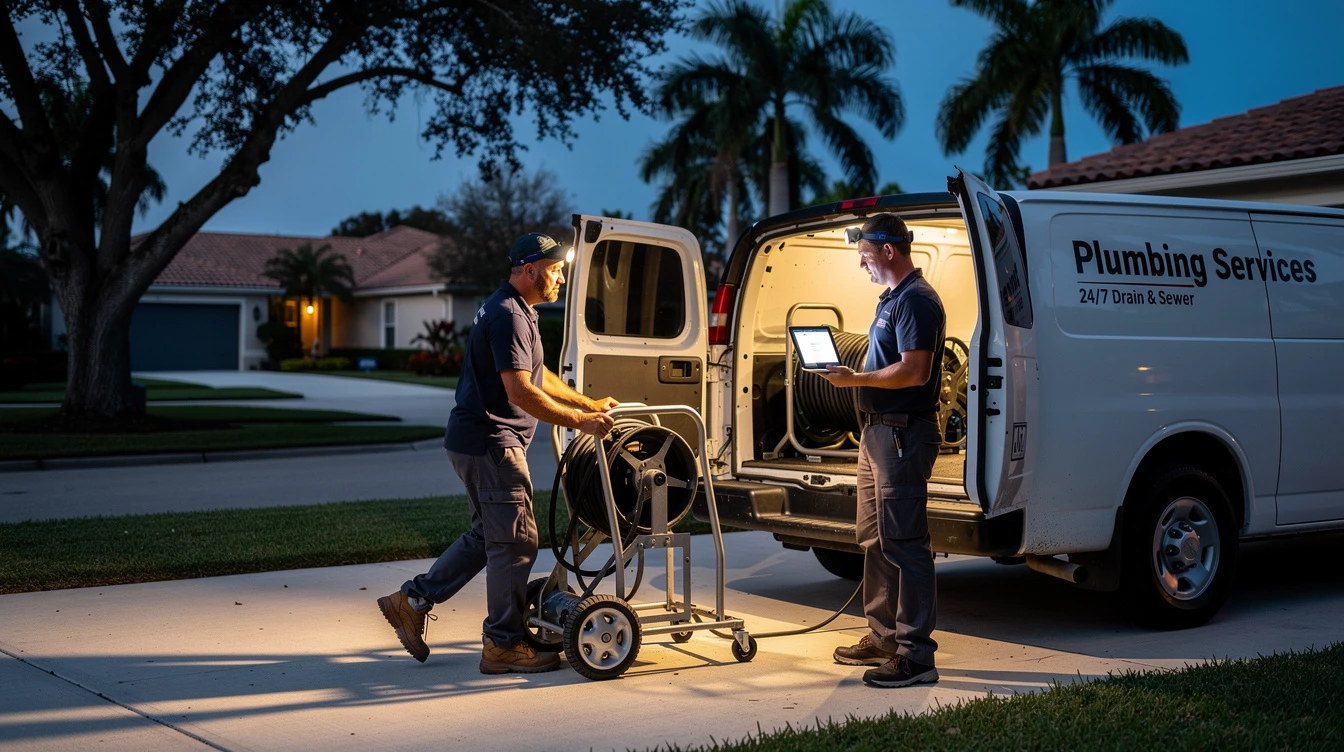
We feed a self-leveling color camera down through the cleanout and watch the run on a screen together. A locator on the camera head pinpoints the exact depth and yard position of any trouble spot, so we know where to dig before a single scoop of dirt moves.
Reading the Footage Together
We stop and rewind on the roots, the offset, the belly, or the scale so you see exactly what we see, and we talk through how far the damage extends. That conversation is what shapes whether we recommend a spot repair or a longer replacement.
Written Scope & Permit Filing
You receive an itemized scope and a firm price before we book the work. When the job requires it, we file the permit with the local building department and schedule the plumbing inspection ourselves, so it never lands on your desk.
Protecting the Yard Before We Dig
We tarp the dig site, cut and set sod aside in slabs so it can go back down whole, and keep the excavation footprint as narrow as the pipe allows. Any trench deep enough to need shoring gets shored properly before anyone climbs in.
Cutting Out the Bad Section
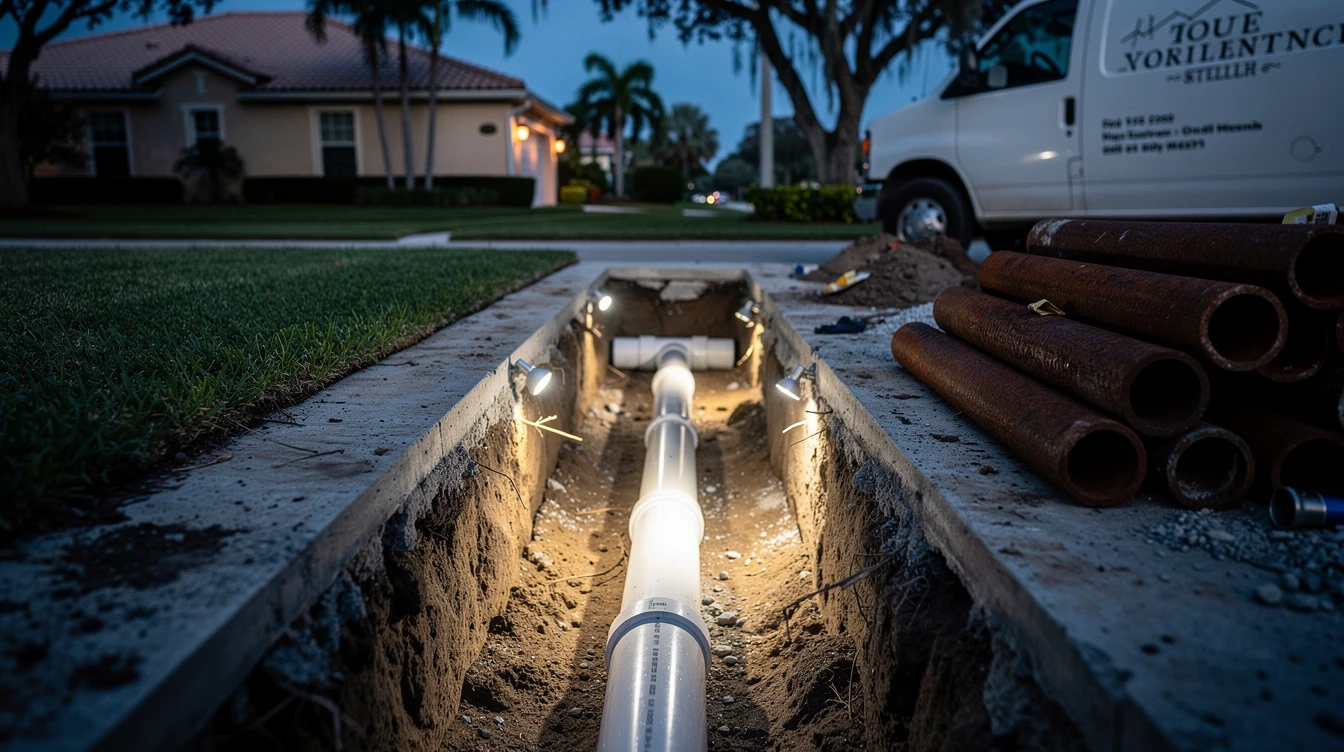
The damaged run is removed and rebuilt with new Schedule 40 PVC, set to proper fall and joined with solvent-welded or banded couplings. Once it's in, we run the camera back through the finished section to confirm the water actually flows before we backfill anything.
Inspection, Backfill & Cleanup
We meet the county or city inspector on site, compact the backfill in layers rather than dumping it in all at once, and lay the sod back down where it came from. You keep a copy of the passed inspection and a written warranty covering the section we repaired.
What actually changes a sewer repair estimate
Every sewer job is different once we see the pipe. Here are the real variables that move your number, explained plainly instead of hidden in fine print.
- How deep and how long the damage runsA shallow fault a few feet from the cleanout costs far less to reach than a deep run under a driveway.
- Whether it's one spot or the whole lineA single section swap runs a fraction of what a full-length relay costs.
- What's sitting above the pipeOpen lawn is quick work; a concrete patio, pavers, or a mature tree over the line means more careful, slower excavation.
- The age and material of your lineBrittle cast iron or old clay tends to keep crumbling past the visible fault once exposed to air.
- Local permit requirementsBroward, Miami-Dade, and Palm Beach municipalities each set their own scope for what triggers a permit and an inspection.
- How much restoration follows the digRe-laying sod is one thing; rebuilding a section of driveway or patio after an open trench adds to the final bill.
One crew, three counties of coverage
Broward County
- Deerfield Beach
- Fort Lauderdale
- Pompano Beach
- Weston
- Plantation
- Pembroke Pines
Miami-Dade County
- Miami
- Aventura
- Hollywood
- Miramar
- Davie
- Aventura Coastal Strip
Palm Beach County
- Boca Raton
- Deerfield Beach North
- Delray Beach
- Boynton Beach
- Lake Worth Beach
- West Palm Beach
What South Florida homeowners are saying
"Roots had completely infiltrated the old cast iron under our slab. The crew handled the permit and the county inspection start to finish, and I never had to make a single call to city hall myself."
"What stood out was how careful they were with the dig. They saved the sod in sections, kept the trench narrow, and by the time they re-graded you'd never know they had been there. They even ran the camera again to prove the flow was clear before closing it up."
"Our drains kept clogging every couple of months no matter how much we snaked them. The camera showed a low spot in the pipe holding water. They replaced that dropped section and it's been trouble-free for over a year now."
Sewer Line Repair FAQ
What exactly does the camera inspection show us?
The camera travels from your cleanout all the way out to the connection point, recording as it goes. On screen we can spot a tangle of roots pushing through a joint, a section that has sunk into a belly, cast iron flaking down to a narrow channel, or a joint that has pulled apart entirely. A locator built into the camera head marks the depth and yard position of the problem so any digging targets the exact spot. You watch the footage alongside us, and we keep a copy so the diagnosis is documented, not just a verbal claim.
If roots caused the problem, will they just come back?
Roots only get back in where there's still an opening. Instead of just clearing them out and moving on, we replace the compromised section with new solid PVC and sealed couplings so there's no crack or gap left for them to find. Ficus and oak trees around South Florida properties are persistent, so if one sits directly over the repaired run we'll point that out. Once the failed pipe is out and intact pipe is in its place, that particular entry point is closed, and it's covered under our written warranty.
Will you deal with the permit and inspection for me?
Yes, that's part of the job. Sewer work that involves opening the ground or replacing a section generally needs a plumbing permit, and the exact rules differ by city across Broward, Miami-Dade, and Palm Beach counties. We file under our license, schedule the inspection, and are on site when the inspector shows up. You keep a copy of the passed record for your own files, which also matters if you ever sell the home and a buyer's inspector asks about prior sewer work.
How long should I expect a sewer repair to take?
A shallow spot repair close to the cleanout can often start and finish in a single day: dig, replace, camera-check, backfill. A full-length replacement, or a repair that runs under a slab, driveway, or dense landscaping, can stretch to a few days once excavation and restoration are factored in. If a permit and inspection are required, that can add scheduling on the back end depending on the city. Once we've seen your footage, we'll give you a real timeline based on your line, not a stock answer.
How do you decide between fixing a spot and replacing the whole line?
The recommendation comes straight from what the camera shows, not from what's easiest to sell. If the pipe looks solid apart from one cracked joint or a short offset, a spot repair is the honest, economical fix and that's what we'll suggest. If the footage instead reveals scale coating most of the run, multiple low bellies, or brittle old pipe failing in more than one place, patching a single spot would just push the next backup down the road a few months. We mark each issue directly on the recording so you can see the full picture and make the call with real information in front of you.
Get Your Camera Inspection Scheduled
Get an honest answer about your sewer line
Watch the camera footage yourself, hear a straight recommendation on spot repair versus full replacement, and let a licensed local crew handle the permit, the excavation, the yard, and the final inspection. Weston Emergency Plumbing SFL backs every completed repair with a written warranty across Broward, Miami-Dade, and Palm Beach counties.
Call (754) 232-7614